

5 Types of Physiotherapy for Children: Which Does Your Child Need?
When parents hear “physiotherapy,” they may picture one type of treatment for injuries or pain. However, physiotherapy can support children in many different ways—from reaching early movement milestones to managing neurological conditions, recovering from sports injuries and building functional independence.
The right approach depends on your child’s age, abilities, challenges and goals. Some children may also benefit from more than one area of physiotherapy.
Here are five types of physiotherapy that may help children and youth.
1. Developmental and Gross Motor Physiotherapy
Developmental physiotherapy helps infants and children build the movement skills they need for everyday life.
Every child develops at their own pace. However, a physiotherapy assessment may be helpful if your child is having difficulty reaching movement milestones or participating in age-appropriate physical activities.
A paediatric physiotherapist may help children who are experiencing:
- Delays in rolling, sitting or crawling
- Difficulty pulling to stand or walking
- Challenges with running, jumping or climbing stairs
- Reduced strength or endurance
- Poor balance or coordination
- Frequent falls
- Postural concerns
- Toe walking
- Torticollis
- Plagiocephaly
- Hypermobility or joint instability
Your child’s physiotherapist will assess their movement, strength, balance, coordination and gross motor skills. Treatment may include play-based exercises, strengthening, balance activities, movement practice and caregiver education.
The goal is to help your child develop the skills and confidence needed to participate in play, school and everyday activities.
Learn more about our paediatric physiotherapy services.
2. Neurological Physiotherapy
Neurological physiotherapy supports children whose movement or physical function has been affected by a condition involving the brain, spinal cord, nerves or muscles.
Children may experience differences in their strength, balance, coordination, muscle tone, posture, walking or ability to complete daily activities.
Neurological physiotherapy may support children with:
- Cerebral palsy
- Spina bifida
- Spinal muscular atrophy
- Traumatic brain injury
- Spinal cord injury
- Down syndrome
- Ataxia
- Hypotonia or hypertonia
- Genetic or neuromuscular conditions
- Other neurological conditions affecting movement
Treatment is individualized according to each child’s abilities, needs and goals. Sessions may include:
- Strength and endurance exercises
- Balance and coordination activities
- Gait and mobility training
- Postural control activities
- Range-of-motion exercises
- Transfer practice
- Task-specific movement training
- Recommendations for supportive equipment
- Parent and caregiver education
The purpose of neurological physiotherapy is not to promise a particular outcome. It is to help each child work toward meaningful goals, improve or maintain physical abilities and participate as fully as possible in everyday life.
Read more about physiotherapy for cerebral palsy and the conditions our paediatric physiotherapists may address.
3. Sports Physiotherapy
Sports physiotherapy is not only for professional athletes. It can help children and youth who participate in school sports, dance, gymnastics, hockey, soccer, swimming, running and other recreational activities.
A sports physiotherapist can assess an injury, identify factors that may be contributing to the child’s symptoms and develop a gradual rehabilitation plan.
Sports physiotherapy may help with:
- Muscle strains
- Ligament sprains
- Tendon-related pain
- Joint pain or instability
- Overuse injuries
- Running-related injuries
- Dance and gymnastics injuries
- Rehabilitation following a fracture or surgery
- Returning to activity after an injury
- Concussion recovery following medical assessment
Treatment may include mobility exercises, progressive strengthening, balance training, movement retraining and exercises based on the physical demands of the child’s activity.
A child should not simply be told to rest until the pain disappears and immediately return to full participation. A gradual return-to-sport plan can help rebuild strength, movement control, confidence and tolerance for activity.
Learn more about our sports injury rehabilitation services, concussion management and physiotherapy for dancers and artistic athletes.
4. Paediatric Orthopaedic Physiotherapy
Paediatric orthopaedic physiotherapy focuses on concerns involving a child’s muscles, bones, joints, tendons and ligaments.
Children’s bodies are still growing, so their assessment and treatment should consider their stage of development, activity level and individual needs.
Orthopaedic physiotherapy may be appropriate for children with:
- Joint or muscle pain
- Muscle weakness
- Reduced flexibility or range of motion
- Postural concerns
- Scoliosis
- Hypermobility
- Joint instability
- Toe walking
- Gait differences
- Orthopaedic injuries
- Recovery following casting or surgery
- Difficulty returning to regular physical activity
The physiotherapist may assess the child’s posture, strength, flexibility, walking pattern and functional movement.
Treatment may include therapeutic exercise, hands-on techniques, mobility work, progressive strengthening and education for the child and family.
The goal is to help reduce limitations, improve physical function and support the child’s safe return to school, play, sports and everyday activities.
Children with orthopaedic concerns can access care through our paediatric physiotherapy and sports injury rehabilitation programs.
5. Intensive Paediatric Physiotherapy
Most physiotherapy programs involve regular appointments spread over several weeks or months. Intensive physiotherapy involves completing therapy more frequently over a shorter period.
This approach may be considered when a child has specific functional goals that could benefit from focused, repetitive practice.
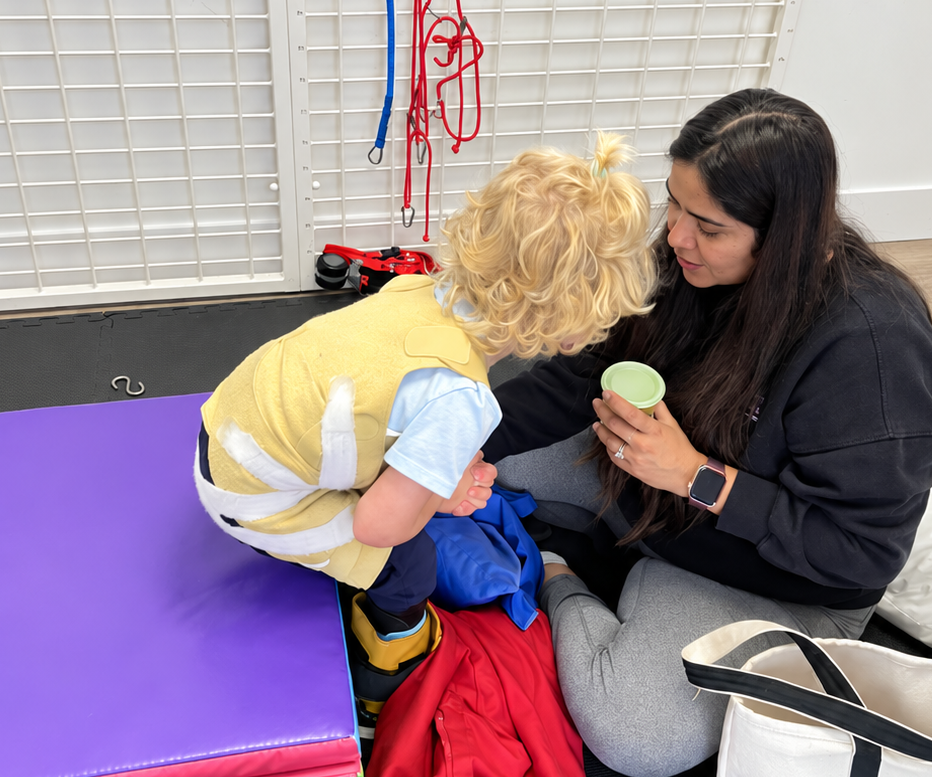
At All About Kids Rehabilitation Centre, our intensive physiotherapy programs may use specialized equipment and approaches, including the TheraSuit® Method and Universal Exercise Unit, also known as the Spider Cage.
Depending on the child’s individualized program, therapy may focus on:
- Strength and endurance
- Balance and coordination
- Postural control
- Standing and walking
- Functional movement
- Motor planning
- Range of motion
- Greater independence with everyday activities
The Universal Exercise Unit uses pulleys, weights and bungee supports to create an exercise environment based on the child’s abilities and treatment goals.
Before beginning an intensive program, a physiotherapist should assess the child and determine whether the frequency, duration and treatment approach are appropriate for their needs.
Every child responds differently to therapy. Families should receive clear information about the proposed program, realistic goals and how progress will be evaluated.
Learn more about our intensive physiotherapy programs for children.
How Do I Know Which Type of Physiotherapy My Child Needs?
There can be significant overlap between these areas.
For example, a child with cerebral palsy may benefit from neurological physiotherapy, developmental support and an intensive program at different points in their care. A young gymnast with hypermobility may need both sports and orthopaedic physiotherapy.
The most appropriate program should be based on an individual assessment—not only a diagnosis.
A paediatric physiotherapist should:
- Listen to your concerns and priorities
- Ask about your child’s medical and developmental history
- Assess your child’s movement and physical function
- Explain their findings clearly
- Work with you to develop meaningful goals
- Create a treatment plan appropriate for your child
- Refer to another healthcare professional when needed
Physiotherapy recommendations should be individualized, realistic and adjusted as your child’s needs change.
When Should I Consider a Physiotherapy Assessment?
Consider speaking with a healthcare professional or paediatric physiotherapist if:
- Your child is having difficulty reaching movement milestones
- You are concerned about how your child walks or moves
- Your child frequently falls or struggles with balance
- Pain or an injury is limiting activity
- Your child is having difficulty returning to sports
- A medical condition is affecting strength or mobility
- Your child has recently had surgery, casting or another medical treatment
- You want guidance on exercises, positioning or physical activity
Parents know their children best. If something about your child’s movement or physical abilities concerns you, an assessment can help you better understand what is happening and whether physiotherapy may be helpful.
Book a Paediatric Physiotherapy Assessment
Not sure which type of physiotherapy your child needs? Our team can learn more about your child’s abilities, challenges and goals, then help you choose the most appropriate appointment.
Mississauga
Book a paediatric physiotherapy appointment in Mississauga
All About Kids Rehabilitation Centre
3413 Wolfedale Road, Unit 1
Mississauga, Ontario L5C 1V8
Phone: 647-598-7462
Email: info@allaboutkidsrehab.ca
Pickering
Book a paediatric physiotherapy appointment in Pickering
All About Kids Rehabilitation Centre
1400 Bayly Street, Unit 9
Pickering, Ontario L1W 3R2
Phone: 289-399-2284
Email: info@allaboutkidsrehabpickering.ca